Rabbit Breed Size & Weight Chart
A rabbit breed size and weight chart from dwarf to giant: typical adult weights, lifespans, and temperaments for 27 popular breeds, plus how size affects care.
Quick answer: Pet rabbit breeds range from about 2 pounds (Netherland Dwarf, Polish) up to 13 to 15 pounds or more (Flemish Giant). Small breeds run 2 to 4 pounds, mediums 4 to 6 pounds, and large breeds 8 to 12 pounds. As a broad pattern, smaller and medium breeds tend to live longer (often 8 to 12+ years) while giants often live somewhat shorter lives. Mixed-breed rabbits fall wherever their parentage lands.
Body condition matters more than the scale number. Check weight against a body condition score and your vet's guidance.
Rabbits come in an astonishing range of sizes, from palm-sized dwarfs to dog-sized giants, and knowing where your rabbit falls helps with everything from choosing an enclosure to judging a healthy weight. The chart below lists typical adult weights for popular breeds along with their size class. This page is educational and does not replace your veterinarian; for an assessment of your rabbit's ideal weight and frame, consult a rabbit-savvy vet.
Rabbit Breed Size and Weight Chart
| Size class | Example breeds | Typical adult weight | General lifespan tendency |
|---|---|---|---|
| Dwarf | Netherland Dwarf, Polish | About 2 to 3 lb | Often long-lived, 8 to 12+ years |
| Small | Holland Lop, Mini Lop, Jersey Wooly | About 2 to 4 lb | Often long-lived |
| Medium | Mini Rex, Dutch, Havana, English Angora | About 4 to 6 lb | Typically 8 to 12 years |
| Large | New Zealand, Californian, Rex | About 8 to 12 lb | Often somewhat shorter than small breeds |
| Giant | Flemish Giant, Continental Giant, French Lop | About 13 to 15+ lb | Often shorter, around 5 to 8 years |
These ranges are general guides, since individual rabbits and especially mixed breeds vary. The broad pattern that smaller breeds tend to live longer than giants is worth keeping in mind, but care quality matters enormously: diet, exercise, neutering, and good vet care can push any rabbit past its breed average. Use the chart to set expectations, not as a hard rule.
Detailed Size Chart: 27 Popular Rabbit Breeds
The table below breaks the size classes down breed by breed, with typical adult weight, expected lifespan, and a short temperament note for each. Weights follow common show-standard and breed-club ranges; individual rabbits, especially pet-quality and mixed lines, can fall outside them.
| Breed | Size class | Typical adult weight | Typical lifespan | Temperament notes |
|---|---|---|---|---|
| Netherland Dwarf | Dwarf | 1.1 to 2.5 lb | 10 to 12 years | Energetic and alert; can be skittish without patient handling |
| Britannia Petite | Dwarf | 2 to 2.5 lb | 6 to 10 years | Very active and high-strung; suits experienced owners |
| Polish | Dwarf | 2.5 to 3.5 lb | 8 to 12 years | Calm and affectionate for such a small breed |
| Dwarf Hotot | Dwarf | 2.5 to 3 lb | 7 to 10 years | Friendly, playful, people-oriented |
| Jersey Wooly | Dwarf | 1 to 3.5 lb | 7 to 10 years | Docile and gentle; wool coat needs regular grooming |
| Holland Lop | Small | 2 to 4 lb | 7 to 12 years | Sweet, lively, hugely popular family rabbit |
| Lionhead | Small | 2.5 to 3.75 lb | 7 to 10 years | Friendly and energetic; mane needs brushing |
| American Fuzzy Lop | Small | 3 to 4 lb | 5 to 8 years | Playful and curious wool breed |
| Mini Rex | Small | 3 to 4.5 lb | 8 to 12 years | Calm with a velvet coat; a classic first rabbit |
| Himalayan | Small | 2.5 to 4.5 lb | 7 to 10 years | Notably patient and easygoing |
| Dutch | Small to medium | 3.5 to 5.5 lb | 8 to 12 years | Sociable, adaptable, long-time family favorite |
| Mini Lop | Medium | 4.5 to 6.5 lb | 7 to 12 years | Affectionate and playful lop |
| Havana | Medium | 4.5 to 6.5 lb | 7 to 12 years | Mellow and sweet-natured |
| Florida White | Medium | 4 to 6 lb | 5 to 8 years | Docile and low-key |
| English Angora | Medium | 5 to 7.5 lb | 7 to 12 years | Gentle; daily coat care is essential |
| English Spot | Medium | 5 to 8 lb | 5 to 9 years | Active, curious, loves to run |
| Harlequin | Medium | 6.5 to 9.5 lb | 5 to 8 years | Playful and clownish |
| Standard Rex | Large | 7.5 to 10.5 lb | 7 to 10 years | Calm and maternal with a plush coat |
| Californian | Large | 8 to 10.5 lb | 5 to 10 years | Mild, friendly, tolerant |
| Satin | Large | 8.5 to 11 lb | 5 to 8 years | Calm with a distinctive glossy coat |
| New Zealand | Large | 9 to 12 lb | 5 to 8 years | Relaxed and tolerant of handling |
| American Chinchilla | Large | 9 to 12 lb | 5 to 8 years | Docile, good-natured heritage breed |
| English Lop | Large | 9 to 11 lb | 5 to 7 years | Placid; the famous long ears need protection and care |
| French Lop | Giant | 10 to 15 lb | 5 to 7 years | Calm, dog-like companion |
| Checkered Giant | Giant | 11 to 13+ lb | 5 to 8 years | Energetic for a giant; needs real space |
| Flemish Giant | Giant | 13 to 15+ lb | 5 to 8 years | The famously docile gentle giant |
| Continental Giant | Giant | 16 to 25 lb | 4 to 7 years | Gentle but needs serious space and sturdy flooring |
Linked breeds have full care guides on this site. Remember that pet-line rabbits often run a little larger than show standards, and that a healthy weight for your individual rabbit is a body condition question, not just a number; pair this chart with the body condition score chart when judging.
Why Size Matters for Care
- Housing. Bigger breeds need larger exercise pens, litter boxes, and more floor space to move comfortably.
- Food. Pellet and greens portions scale with body weight, so a giant eats far more than a dwarf.
- Feet. Heavy breeds put more pressure on their hocks, so comfortable, soft flooring is especially important.
- Lifespan. Knowing the broad size-lifespan pattern helps you plan for the years ahead.
- Healthy weight. Pair the breed range with a body condition score, since frame matters more than a single number.
Whatever your rabbit's size, the fundamentals are identical: unlimited grass hay, room to run and binky, fresh greens and water, soft flooring, and a rabbit-savvy vet. Weigh your rabbit regularly with a gram scale to catch weight trends early, and check its body condition by feel rather than relying on appearance alone, since fluffy coats hide a lot.
Track Your Rabbit's Weight
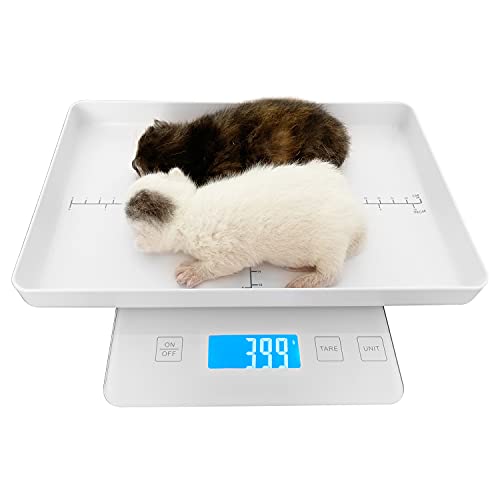
MINDPET-MED Digital Pet Scale, Gram Precision
A precise gram scale lets you weigh your rabbit regularly and catch weight changes early.
See also our body condition score chart to judge healthy weight, the rabbit lifespan by breed chart, and the daily diet amounts by weight guide for size-appropriate portions.
Rabbit Care Planner
Track your rabbit's health, meds, vet visits, mobility, nutrition, and quality of life, all in one printable planner.
Editor's Pick · Affiliate link
A Chew-Proof Two Storey Hutch
Rabbits chew everything, and a wooden hutch becomes a repair project and a health risk once it is soaked and gnawed. A full metal frame with two levels gives the vertical space rabbits actually use, and it survives the chewing that destroys cheaper housing.
Frequently Asked Questions
How big do pet rabbits get?
Pet rabbits vary enormously by breed, from tiny dwarfs to giant breeds. The smallest, like the Netherland Dwarf and Polish, mature at around 2 to 3 pounds, small breeds such as the Holland Lop sit around 2 to 4 pounds, and medium breeds like the Mini Rex and Dutch land near 4 to 6 pounds. Large breeds including the New Zealand and Californian reach 8 to 12 pounds, while giants like the Flemish Giant can exceed 13 to 15 pounds or more. Mixed-breed rabbits fall wherever their parentage lands, so adult size can be hard to predict.
Does breed size affect how long a rabbit lives?
Generally yes. As a broad pattern, smaller and medium rabbit breeds tend to live longer, often 8 to 12 years or more with good care, while the largest giant breeds frequently have shorter lifespans, sometimes around 5 to 8 years. This mirrors a pattern seen in some other animals where larger bodies are linked to shorter lives. Individual care matters hugely though: diet, exercise, neutering, vet care, and genetics all influence lifespan, so a well-cared-for rabbit of any size can do better than the breed average.
How much space does a rabbit need based on size?
All rabbits need far more room than a typical pet-store cage, and larger breeds need proportionally more. A good baseline is enough space to take several hops in a row, stand fully upright on the hind legs, and stretch out flat, plus daily exercise time outside the enclosure. A giant breed obviously needs a bigger pen and more floor space than a dwarf. Rather than a fixed cage size, aim for a roomy exercise pen as a home base paired with free-roam time in a rabbit-proofed area.
How do I know if my rabbit is a healthy weight?
Breed size charts tell you the typical adult weight, but body condition matters more than the number on the scale. A healthy rabbit has ribs and a spine you can feel with gentle pressure but that are not sharply visible, a smooth waistline, and no large fat pads. Use a body condition score alongside breed expectations. Weigh your rabbit regularly with a gram scale to spot trends, since steady weight loss or gain is an early health clue. Your vet can confirm whether your rabbit's weight is ideal for its frame.
Can I predict a baby rabbit's adult size?
If you know the breed, the breed's typical adult range is your best guide, since purebred rabbits grow to fairly predictable sizes. For mixed-breed or unknown rabbits it is harder, though large paws and heavy bone in a young kit can hint at a bigger adult. Many small breeds reach near-adult size by four to six months, while giant breeds keep growing for considerably longer, sometimes up to a year and a half. If adult size matters for your housing plans, ask a vet or rescue for their best estimate.
Are bigger rabbits harder to care for?
Not harder exactly, but their needs scale up. Giant breeds eat more hay and greens, need larger enclosures and more exercise space, and are more prone to issues like sore hocks because of the pressure their weight puts on the feet, so comfortable flooring matters even more. Their shorter average lifespan is worth knowing too. That said, big rabbits are often famously calm and affectionate. The core care is the same at any size: unlimited hay, space to move, a rabbit-savvy vet, and attention to weight and feet.
Why does knowing breed size help me?
Knowing your rabbit's expected adult size helps you plan housing, budget for food, anticipate lifespan, and judge a healthy weight. It guides how big an exercise pen and litter box to buy, how much hay and greens to provide, and what body condition to aim for. It also flags size-linked concerns, like extra attention to flooring and feet in heavy breeds. While breed charts are general and mixed rabbits vary, having a ballpark for your rabbit's frame makes it easier to give size-appropriate care and spot when something is off.
Need more help caring for your rabbit?
Browse our guides by topic to find practical solutions.
Wellness Planner: $39