Best Hay for Rabbits: Timothy, Orchard & More
The best hay for rabbits compared: timothy, orchard grass, meadow, and alfalfa. How to choose by age, cutting, and texture, plus trusted brands for daily feeding.
Hay is the foundation of a rabbit's diet, making up about 80 percent of what a healthy bunny should eat, so choosing a good one matters more than almost any other food decision. The encouraging news is that there is no single best hay, only the best hay for your particular rabbit. Several grass hays are nutritionally excellent, and the winner is usually whichever one your rabbit happily munches all day.
Below we compare the main hay types and several widely trusted options so you can pick with confidence. Our picks are based on hay type and quality standards used by the House Rabbit Society and exotic vets, along with verified owner reviews, not on personal testing.
Best Hays for Rabbits


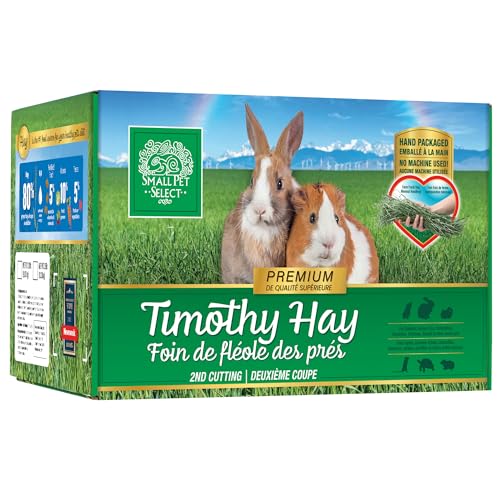
Small Pet Select 2nd Cutting Timothy Hay
Balanced leaf-to-stem cutting that suits most adult rabbits


How We Chose
We focused on grass hays appropriate for everyday adult feeding, prioritizing high fiber, long strands that promote chewing, freshness and aroma reported by verified owners, and consistent availability. We also included one legume hay, alfalfa, for the situations where it genuinely fits. These recommendations reflect mainstream rabbit-care guidance rather than hands-on lab testing, and your own rabbit's preferences are the final word.
Grass Hay Versus Legume Hay
The first thing to understand is the split between grass hays and legume hays. Grass hays, which include timothy, orchard grass, and meadow hay, are the right everyday choice for adult rabbits because they are high in fiber and moderate in protein and calcium. Alfalfa is a legume hay, much higher in protein and calcium, which makes it ideal for growing youngsters but too rich for the average adult, where it can contribute to bladder sludge and weight gain.
| Hay type | Best for | Texture | Notes |
|---|---|---|---|
| Timothy | Adult everyday staple | Coarse, grassy | Most popular, widely available |
| Orchard grass | Adults, picky eaters | Soft, sweet | Easier on allergy-prone owners |
| Meadow hay | Variety and foraging | Mixed strands | Natural blend of grasses |
| Alfalfa | Under 7 months, nursing | Soft, leafy | Too rich for healthy adults |
Timothy Hay: The Reliable Standard
Timothy is the hay most owners reach for first, and for good reason. It has the right fiber profile for adults, a texture coarse enough to encourage the chewing that wears down teeth, and it is sold almost everywhere. Both the Oxbow Western Timothy and the budget-friendly Kaytee Timothy are dependable choices. If your rabbit is enthusiastic about timothy, you can happily make it the everyday base of the diet.
Orchard Grass and Meadow Hay for Variety
Orchard grass offers nearly the same nutrition as timothy but with a softer, sweeter character that some rabbits clearly prefer. It is also a common recommendation for owners whose allergies flare around timothy. Meadow hay is a natural mix of grasses with varied strand lengths, which makes it excellent for foraging enrichment. Rotating these alongside timothy keeps a rabbit interested in hay, which matters because the more hay a rabbit eats, the healthier its gut and teeth stay.
Rabbit Care Planner
Track your rabbit's health, meds, vet visits, mobility, nutrition, and quality of life, all in one printable planner.
Understanding Cuttings
Premium hay is often labeled by cutting. First cutting is stemmy and coarse with the most fiber, which is great for dental wear. Second cutting balances leaf and stem and is the crowd-pleaser most rabbits eat readily. Third cutting is soft and leafy, useful for tempting fussy eaters but lower in the coarse fiber that grinds teeth. Many owners keep a coarser hay for dental benefit and a softer one to encourage eating, which is a perfectly good strategy.
When Alfalfa Is the Right Choice
Alfalfa earns its place for specific rabbits: those under about 7 months who are still growing, pregnant or nursing does, and sometimes underweight or recovering rabbits when a vet recommends it. The extra protein and calcium support growth and recovery. As a young rabbit matures, transition it gradually onto grass hay over a couple of weeks. For a healthy adult, alfalfa should be at most a rare treat, not a staple.
The Bottom Line
The best hay for your rabbit is a fresh, fragrant grass hay your rabbit eats with gusto, with timothy the natural starting point and orchard or meadow hay excellent for variety. Reserve alfalfa for the young, nursing, or recovering. Buy in amounts you can keep fresh, store it somewhere dry and breathable, and always keep the rack full. If your rabbit suddenly stops eating hay, that is a reason to check in with a rabbit-savvy exotic vet, since it can signal a dental or digestive problem.
Related Diet Guides
- How Much Hay Do Rabbits Need? - Daily amounts and feeding tips.
- Why Won't My Rabbit Eat Hay? - Troubleshooting a hay strike.
- What Do Rabbits Eat? - The complete daily diet overview.
Editor's Pick · Affiliate link
A Chew-Proof Two Storey Hutch
Rabbits chew everything, and a wooden hutch becomes a repair project and a health risk once it is soaked and gnawed. A full metal frame with two levels gives the vertical space rabbits actually use, and it survives the chewing that destroys cheaper housing.
Frequently Asked Questions
What is the best type of hay for an adult rabbit?
For a healthy adult rabbit, a grass hay such as timothy, orchard grass, or meadow hay is the best everyday choice. These are high in fiber and modest in protein and calcium, which suits an adult's needs. Timothy is the most popular and widely available, but rotating in orchard or meadow hay adds variety and can tempt picky eaters. Avoid alfalfa as a staple for adults because it is too rich.
Is timothy or orchard grass hay better?
Both are excellent grass hays with similar nutrition, so the better one is whichever your rabbit eats more enthusiastically. Timothy has a slightly coarser texture and a classic grassy smell, while orchard grass is often softer and sweeter, which some rabbits prefer. Owners with hay allergies sometimes find orchard grass easier to handle. Offering both lets your rabbit choose and keeps mealtimes interesting.
What hay cutting should I buy?
Hay is sold by cutting. First cutting is coarser and stemmier with more fiber, second cutting is the popular middle ground with a balance of leaf and stem, and third cutting is the softest and leafiest. Most rabbits do well on second cutting. Coarse first cutting encourages more chewing for dental health, while soft third cutting can tempt fussy eaters, so many owners keep a couple of types on hand.
When should a rabbit eat alfalfa hay?
Alfalfa is a legume hay that is higher in protein and calcium than grass hay. It suits young growing rabbits under about 7 months, pregnant or nursing does, and sometimes underweight or recovering rabbits under vet guidance. For healthy adults it is too rich and can contribute to bladder sludge and weight gain, so adults should eat grass hay instead, with alfalfa reserved as an occasional treat at most.
How do I store hay to keep it fresh?
Keep hay in a dry, breathable container in a cool spot out of direct sun. A cardboard box, paper bag, or fabric bin allows airflow better than a sealed plastic tub, which can trap moisture and lead to mold. Good hay smells fresh and grassy and looks green to greenish-brown. Discard any hay that smells musty, looks gray or dusty, or feels damp, since moldy hay can make rabbits seriously ill.
How much hay should I buy at a time?
Buy an amount you can use within a few months while it is still fresh. A single average rabbit eats roughly a body-sized pile of hay each day, which adds up quickly. Larger boxes and bulk bags are more economical and reduce packaging, but only if you have dry storage and your rabbit reliably eats that variety. When trying a new hay, start with a smaller bag in case your rabbit turns up its nose.
Need more help caring for your rabbit?
Browse our guides by topic to find practical solutions.
Wellness Planner: $39