Senior Rabbit Diet: Feeding an Older Bunny
How to adjust an older rabbit's diet: keeping hay central, softer hays for worn teeth, managing weight, and helping a frail senior eat well. Vet-informed guidance.
Feeding a senior rabbit is a gentle balancing act. On one hand, the core principles never change: hay first, plenty of greens, a measured pellet ration, and fresh water always available. On the other, an older body has new needs. Teeth may be worn, the gut a little slower, and weight harder to hold in a frail rabbit or harder to shift in a less active one. The art of the senior diet is keeping the foundation steady while adjusting the details to suit the rabbit in front of you.
This guide explains how to feed an aging rabbit well: why hay stays central, when to soften the diet, how to manage weight in both directions, and how to help a senior that is struggling to eat. It is educational and not a substitute for advice from a rabbit-savvy exotic vet, who should guide any significant change.
Diet Support for Senior Rabbits
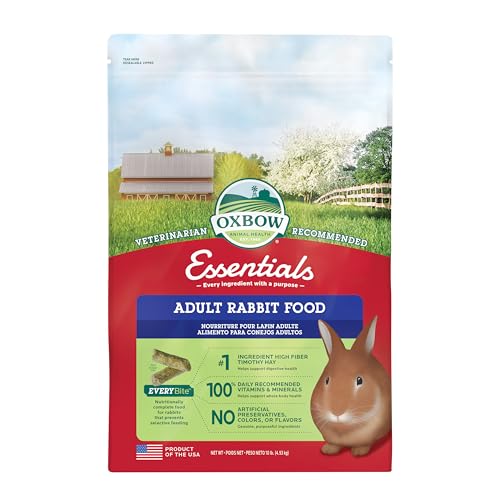
Oxbow Oxbow Essentials Adult Rabbit Food
Timothy-based pellets to help hold weight in older rabbits


Oxbow Oxbow Critical Care Herbivore
Vet-recommended recovery formula for a frail rabbit that won't eat
Hay Stays the Foundation
No matter how old your rabbit is, unlimited grass hay should make up around 80 percent of its diet. Hay does two things that matter even more with age. Its long fibers keep continuously growing teeth worn down, helping prevent the dental disease seniors are prone to, and that fiber keeps the gut moving, guarding against the slowdown called GI stasis that older, less active rabbits face more readily. If your rabbit struggles to chew coarse timothy, do not drop hay; switch to a softer grass hay instead.
Softer Hays for Worn Teeth
Years of chewing can wear teeth unevenly, and dental disease becomes more common in older rabbits. When coarse timothy gets hard to manage, softer grass hays like orchard grass or meadow hay are gentler on aging mouths while still providing the fiber your rabbit needs. Offer a variety and notice which your rabbit eats most readily. If you see dropped food, drooling, or weight loss, that points to a dental problem your vet should assess, since overgrown teeth or molar spurs may need professional filing.
Rabbit Care Planner
Track your rabbit's health, meds, vet visits, mobility, nutrition, and quality of life, all in one printable planner.
Managing Weight in Both Directions
Senior rabbits drift in two directions, and the diet fix differs for each.
- The underweight senior: A frail older rabbit losing condition may need a more generous pellet ration, some alfalfa for extra calories under vet guidance, and plenty of enjoyable greens, always with hay available. First, though, have your vet check for dental disease, kidney problems, or other illness behind the weight loss.
- The overweight senior: A less active older rabbit can gain weight, which strains arthritic joints and makes self-grooming harder. The answer is the opposite: trim pellets, lean on unlimited hay, and keep treats minimal.
Weigh your rabbit regularly with a kitchen scale so you catch trends early, and adjust with your vet rather than guessing.
Helping a Rabbit That Struggles to Eat
A senior that is barely eating needs prompt attention, because reduced intake quickly becomes dangerous in rabbits. Difficulty eating usually traces back to dental disease, so a vet visit comes first. In the meantime, softer hays, finely chopped or softer greens, and pellets softened with a little water into a mash can all help. A frail rabbit that is hardly eating may need syringe-feeding of a recovery formula, given under your vet's direction. Never simply wait and hope a rabbit starts eating again, as a rabbit not eating is an emergency.
A Word on Alfalfa and Supplements
Alfalfa, a calorie-rich legume hay normally reserved for young rabbits, can sometimes help a thin, frail senior gain weight, but only under vet guidance, since the extra calcium is risky for rabbits prone to bladder sludge or kidney issues. Likewise, most seniors on a good diet do not need supplements, and none should be started without veterinary advice. Some arthritic rabbits are recommended joint support, but that is an individual decision with your vet. The best senior nutrition is the right balance of hay, greens, and pellets, not a shelf of extras.
The Takeaway
Feeding an older rabbit well means holding the foundation steady while adapting the details. Keep hay unlimited, soften it if teeth need it, manage weight in whichever direction your rabbit drifts, help a struggling eater promptly, and make every significant change with your exotic vet. Get this balance right and you give your senior rabbit the energy, comfort, and digestive health to enjoy its later years to the full.
Related Guides
- Senior Rabbit Care - The complete guide to older-rabbit care.
- Common Senior Rabbit Health Issues - Dental and other conditions affecting diet.
- Best Hay for Rabbits - Choosing the right hay at any age.
Editor's Pick · Affiliate link
A Chew-Proof Two Storey Hutch
Rabbits chew everything, and a wooden hutch becomes a repair project and a health risk once it is soaked and gnawed. A full metal frame with two levels gives the vertical space rabbits actually use, and it survives the chewing that destroys cheaper housing.
Frequently Asked Questions
What should a senior rabbit eat?
The foundation does not change: unlimited grass hay should still make up around 80 percent of a senior rabbit's diet to keep teeth worn and the gut moving. Around that, you adjust to suit an older body. Many seniors do well on softer hays like orchard or meadow grass if chewing coarse timothy gets harder, alongside fresh leafy greens they can eat comfortably and a measured amount of quality pellets. Thin or frail seniors may need more pellets or, under vet guidance, some alfalfa, while overweight ones need less. Tailor it to your rabbit.
Should I give a senior rabbit more pellets?
Sometimes, but only when weight and condition call for it. Healthy adult rabbits are usually kept to a limited pellet ration to avoid obesity, but an underweight or frail senior that is losing condition may benefit from a more generous pellet allowance to hold its weight. The reverse is true for an overweight older rabbit. Because the right amount depends on your individual rabbit's weight, teeth, and appetite, this is a change to make with your exotic vet, who can weigh your rabbit and advise rather than guessing.
Can senior rabbits have alfalfa hay?
It can be useful in specific cases, under vet guidance. Alfalfa is a legume, higher in calories, protein, and calcium than grass hay, which is why it is normally reserved for young, growing rabbits and avoided in healthy adults. For a thin, frail, or recovering senior that is struggling to keep weight on, a vet may suggest adding some alfalfa to boost calories. It is not right for every older rabbit, especially those prone to bladder sludge or kidney issues from the extra calcium, so always check with your vet first.
What if my senior rabbit has trouble chewing?
Difficulty chewing usually points to dental disease, which is common in older rabbits and needs a vet to assess and treat, since overgrown teeth or molar spurs may need filing. In the meantime, softer hays like orchard or meadow grass are easier than coarse timothy, finely chopped or softer greens help, and pellets can be softened with a little water into a mash. A frail rabbit that is barely eating may need syringe-feeding of a recovery formula under vet direction. Never ignore a rabbit struggling to eat, as reduced intake quickly becomes dangerous.
How do I help an underweight senior rabbit gain weight?
First, see your vet, because weight loss in an older rabbit can stem from dental disease, kidney problems, or other illness that needs treating, not just more food. Once underlying causes are addressed, your vet may suggest a more generous pellet ration, some alfalfa for extra calories, plenty of greens your rabbit enjoys, and ensuring hay remains constantly available. Weigh your rabbit regularly with a kitchen scale to track progress. Gradual, steady gain guided by your vet is the goal, rather than sudden rich foods that can upset a sensitive gut.
Do senior rabbits need supplements?
Most senior rabbits on a good hay-first diet do not need routine supplements, and you should never start any supplement without veterinary advice. Some older rabbits with diagnosed arthritis are prescribed or recommended joint support, and a vet may suggest specific supportive products for particular conditions, but these are individual decisions made with your exotic vet, not blanket additions. The best nutrition for a senior rabbit is the right balance of hay, greens, and an appropriate pellet ration, adjusted to its weight and dental health, rather than a cabinet of supplements.
Why is hay still so important for old rabbits?
Hay does two essential jobs that matter even more with age. The long fibers keep a rabbit's continuously growing teeth worn down, which helps prevent the dental disease seniors are prone to, and that same fiber keeps the gut moving, guarding against the slowdown called GI stasis that older, less active rabbits face more easily. So even as you adjust pellets and greens for an aging body, unlimited grass hay stays the non-negotiable core of the diet. If coarse hay becomes hard to chew, switch to a softer grass hay rather than dropping hay altogether.
Need more help caring for your rabbit?
Browse our guides by topic to find practical solutions.
Wellness Planner: $39